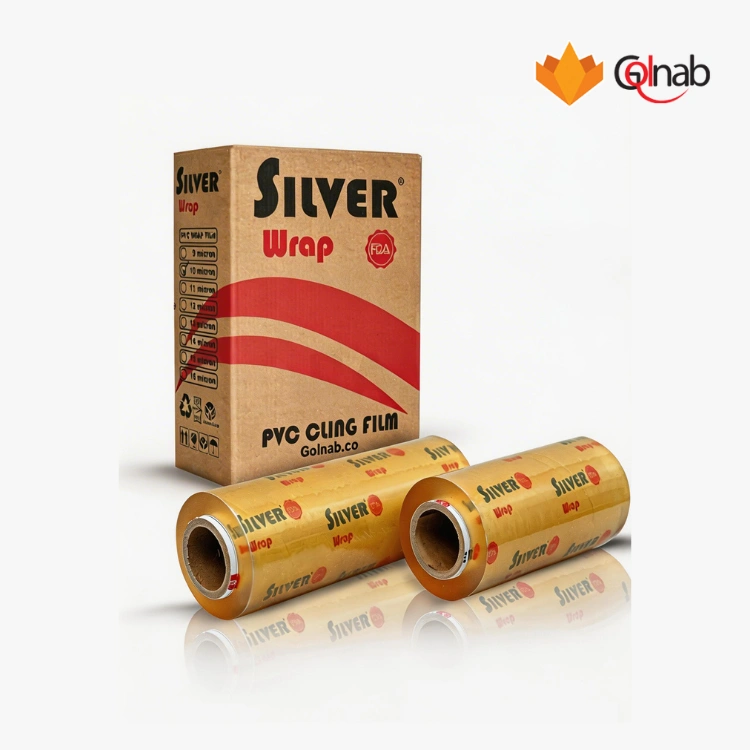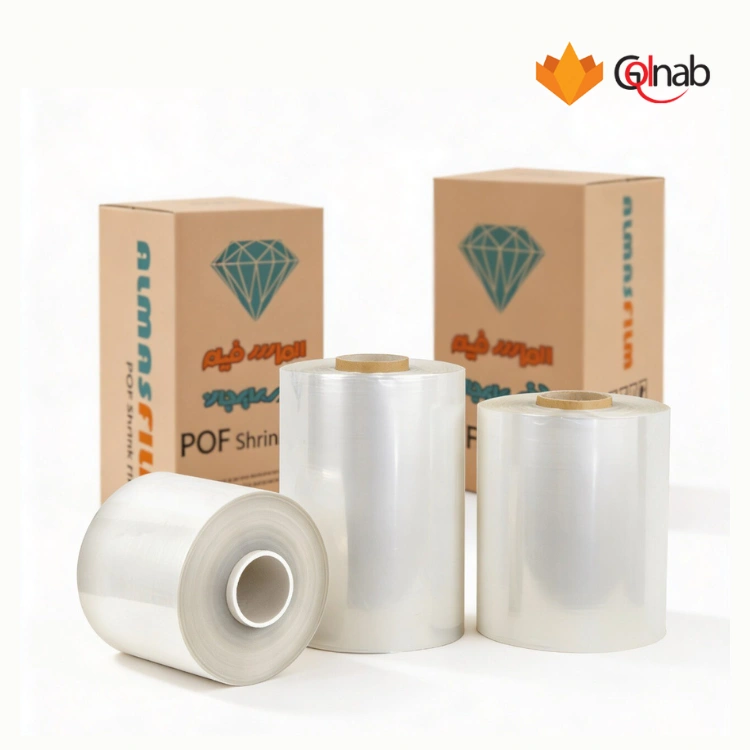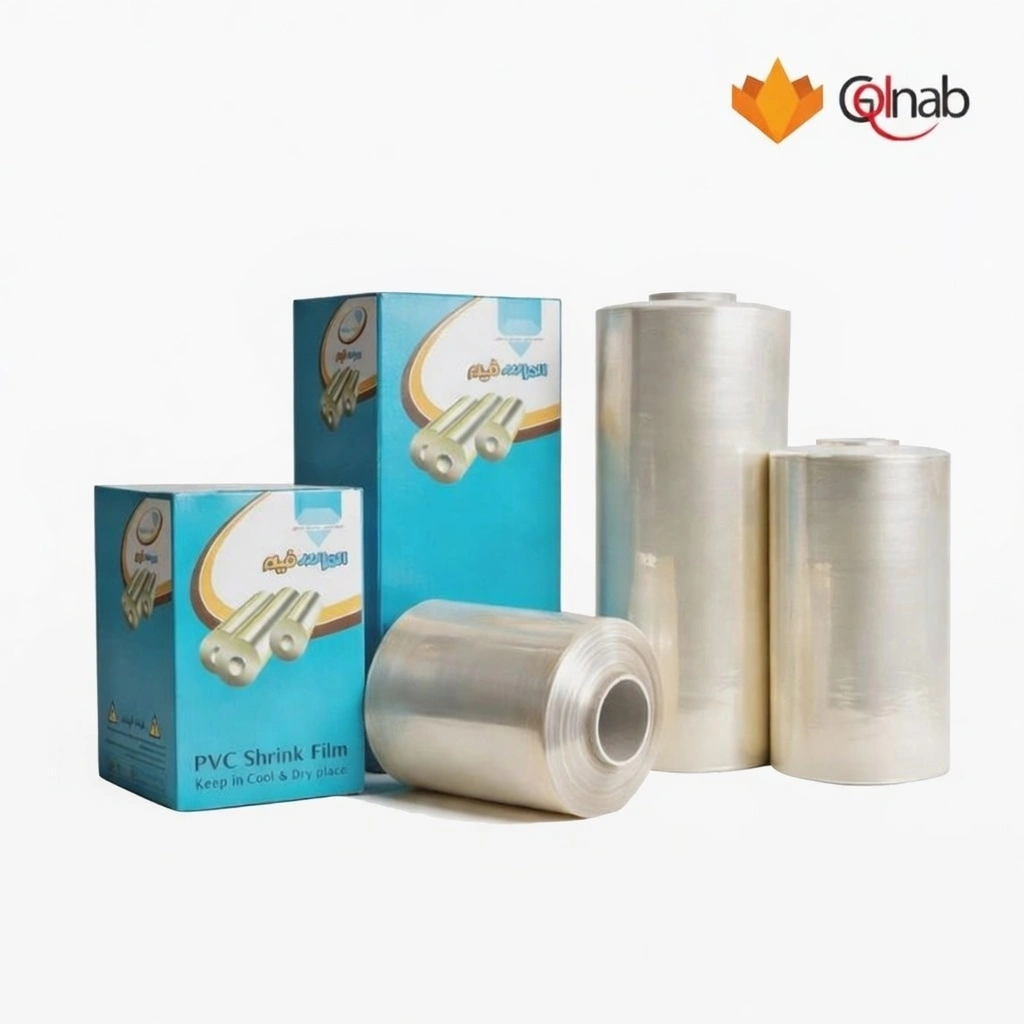
PVC shrink film
PVC shrink film is a type of thermal cellophane that is shrunk by surrounding the product and heating it with hot air. This shrinking or shrinking of the film environment continues until it covers all the corners and edges of the product and, so to speak, sticks to the product. This fitting, along with the very uniform and imperceptible stitching and high transparency of this type of film, makes the product and packaging more beautiful and impenetrable. Subsequently, in the store window, it increases sales by increasing the beauty of the product’s visual appearance and gaining consumer trust. PVC shrink film or thermal cellophane is a type of polymer coating that surrounds the product and shrinks around the product using heat. This process, known as shrinking, continues until the film covers all the corners of the product and, so to speak, sticks to it. This fitting, along with the very uniform and imperceptible stitching and high transparency of this type of film; It makes the product and packaging more beautiful and impenetrable, and subsequently increases sales in the store window by enhancing the visual beauty of the product and gaining consumer trust.
| Feature | Amount |
|---|---|
| Thickness | 17 to 45 microns |
| Width | 150 to 900 mm |
| Length | 700 meters |
| Quantity in package | 1 piece |
What materials is PVC shrink film made of?
PVC shrink film (Polyvinyl chloride shrink film), which is made from the polymer material polyvinyl chloride (Polyvinyl chloride) with molecular compounds of carbon and oxygen and with the addition of materials to enhance properties such as softness, elasticity and transparency, has become an inseparable part of packaging in many industries in the last 2 decades, which is mostly used for visual beauty, cheap seals and increasing the shelf life of packaged food. Before PVC shrink, these tasks were mostly the responsibility of polyethylene and viscose shrinks, each of which gave way to PVC shrink due to the weaknesses and shortcomings that they had in the applications considered by manufacturers and companies. The high thickness of polyethylene shrink, as well as its opacity and lack of shape and sewing ability, and in the case of viscose due to the low speed of packaging and the difficulty of packaging with high fitting, have been the main disadvantages of this type of shrink. PVC shrinks are due to the special type of polyvinyl chloride molecular structure on the one hand and the structure on the other. Its molecular flexibility to accept other additives has made it a polymer film with very desirable properties. Its softness, very low thickness and high transparency, uniform sewing ability and high shrinkability have made it possible to create an outer layer and completely surround the product or product box and give high brightness and transparency to the shrunken goods, increasing the visual and aesthetic aspects and customer friendliness. With the perfect sewing it does, it can increase the durability of the product and its security, and attract consumer trust and confidence, and increase sales and promote the company’s brand. PVC thermal cellophane is produced in widths of 15 to 90 cm and thicknesses of 17 to 45 cm, and in single and double layers, with one open side or both closed sides (intestinal), and is wrapped around a plastic bobbin and is available in lengths of 300 to 700 meters, depending on the thickness of the film.
High shrinkability of PVC shrink films
After the product is placed between the layers of PVC shrink film, hot air is blown onto the surface of the film. Due to the shrinkage of the film surface, this polymer coating adheres to the body of the product and becomes completely integrated with it.
This shrinkage and shrinkage of PVC shrink films, which has a higher coefficient compared to other types of shrink films, is due to the structural characteristics and production processes of these films. The molecular structure of these films consists of flexible polymer chains and has significant mobility. Heating and stretching the film in two directions arranges the polymer chains in specific directions and prepares them to return to their original state. Finally, plasticizers added to PVC also increase the flexibility and movement space of the polymer chains.
Transparency
In addition to the high shrinkability coefficient, the transparency of this type of film is higher than that of other cellophane and polymer coatings. This transparency not only does not create any visual obstacles for the observer, but also gives the packaging a shine due to the reflection of ambient light and its smooth surface, as well as its perfect fit with the product surface.
The transparency of these films is due to multiple factors. Unlike the crystalline structure, the amorphous structure, due to the lack of a coherent and compact structure, reduces light scattering and increases light transmission with minimal resistance. Also, the very low thickness and smooth and polished surface of these films cause light to pass through it in the shortest possible time and without breakage. Adding softeners and optical brighteners also helps to increase the transparency and special properties of these films. This feature of PVC shrink films is very suitable for packaging that requires transparency.
Resistance and flexibility
Glanab PVC shrink films are ideal for packaging light weight products. For packaging heavy products and cartons, polyethylene shrink films should be used. However, PVC shrink films can also act as a protective and suitable coating for products weighing less than 5 kg. The chlorine atoms and irregular amorphous structure of the molecules in PVC create weak attractions between adjacent chains and increase the freedom of movement and flexibility of the chains, which increases the flexibility of these coatings and helps the film resist tearing, punctures and abrasion. Plasticizers are also added to increase flexibility and reduce brittleness. These small molecules increase the space between the polymer chains and give them more freedom of movement so that the film surface does not tear or break when pressure is applied.
Very thin thickness
The combination of proper tensile strength, flexibility and molecular structure ensures effective performance of shrink films even at thin thicknesses. Advanced production techniques and selection of raw materials in the formulation and production process enable the production of thin, quality films in thicknesses of 17 to 50 microns.
Uniform stitching
When two layers of PVC shrink film are placed on top of each other and cut by an element-equipped blade, due to the inherent properties of these films, the edges of the two layers melt and stick together as they are cut. This process is called “stitching”. The quality of this stitching is so high that it is difficult to distinguish it from the smooth surface of cellophane. Polyvinyl chloride (PVC) shrink film has high cutability and stitchability due to its continuous and uniform shrinkage when exposed to heat, as well as its high weldability, smooth surface, and low thickness, and causes it to create a smooth and uniform surface when cut with electric elements.
PVC shrink production process
First, PVC powder, which is the most important ingredient in shrink, is poured into a mixer along with other additives such as stabilizers, etc. and mixed well inside the mixer with rotation and heat from friction. Then it is transferred to another container to cool. Then, during the extrusion process that occurs inside the extruder, it becomes a uniform molten material and comes out of the die in the form of a ring. This balloon is semi-solid due to the heat it has and is completely flexible. It becomes larger and more voluminous when blown with air. Finally, when it cools completely, it is wrapped on bobbins.
The difference between PVC shrink and polyethylene is precisely in its flexibility; polyethylene does not have the ability to become as thin as PVC, and it also cannot become as voluminous as PVC film, which causes PVC to shrink more during packaging.
Wholesale sales of shrink and stretch films
Golnab is the first manufacturer of PVC and POF shrink films in Iran.
How PVC shrink wrap works when packaging
PVC shrink wraps are expanded during the manufacturing process using heat and air. This process puts them in an unstable state and therefore they tend to return to their original state and shrink. This happens when they are exposed to heat again. When packaging a product, the shrink wrap is placed between two layers and using hot air, which is around 90 degrees; it returns to its original volume and area but because a product is placed inside the wrap; it hardens on the product. In this case, the shrink wrap PVC is still warm and flexible and can completely cover all surfaces of the box or product.